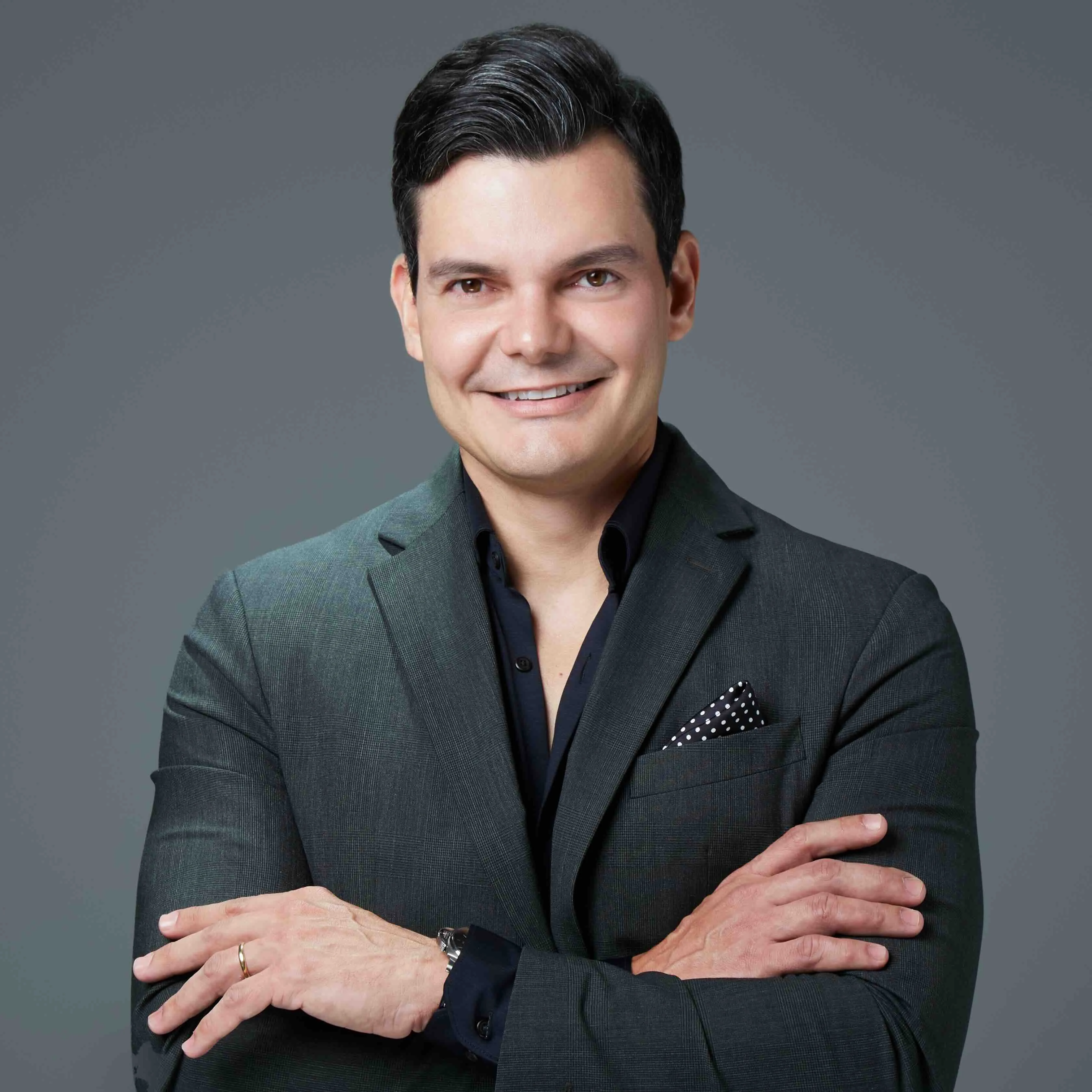
Facial surgery, an ancient quest for eternal youth and aesthetic harmony, has trodden a fascinating path from rudimentary skin cuts to sophisticated minimally invasive techniques. This journey, marked by anatomical discoveries, technological advances, and constant improvement, culminates in Dr. Robério Brandão’s Modern Face philosophy, which redefines standards of safety, naturalness, and recovery.
In this article, we will embark on a journey through time to explore the origins of facial surgery, its pivotal moments, the figures who shaped its course, and the challenges that drove its evolution. Prepare to uncover the secrets behind the quest for the Modern Face.
The Beginnings: Skin Excision and the Awakening of Rhytidectomy
The first steps of facial surgery were taken in the art of skin excision. In a world without modern anesthesia refinements or deep knowledge of facial anatomy, pioneer surgeons relied on direct skin removal to combat signs of aging.
These initial procedures, although limited, represented the awakening of a new era in aesthetic surgery. The quest for more lasting and natural results would soon drive the development of more complex techniques, marking the birth of rhytidectomy, or facelift.
The Birth of Rhytidectomy
In the early 20th century, rhytidectomy began to take shape, driven by visionary surgeons seeking more comprehensive and lasting results. These pioneers recognized that simple skin excision was not enough to treat underlying sagging, and began exploring techniques to reposition deeper tissues.
Among names that stood out in this period, we find:
- Erich Lexer: One of the first to perform facelifts with strategically positioned incisions to minimize visible scars.
- Suzanne Noël: An advocate for rhytidectomy for women, who popularized the technique and contributed to its social acceptance.
- Raymond Passot: An innovator who developed techniques to treat neck sagging in conjunction with the facelift.
These early surgeons, with their boldness and ingenuity, laid the foundations for modern facial surgery. Their techniques, although considered rudimentary by current standards, represented a significant leap from previous approaches.
The Golden Age: Subcutaneous Plane and the Quest for Durability
After World War II, facial surgery experienced a period of great advancement. Surgeons like Tord Skoog and José Juri developed techniques to detach skin in a subcutaneous plane, allowing broader repositioning of facial tissues.
This approach, known as subcutaneous rhytidectomy, became the gold standard for decades, offering more predictable and lasting results than previous techniques. However, subcutaneous rhytidectomy also presented its limitations:
- Results were not yet totally natural, with risk of a “stretched” look.
- Durability, although improved, was not yet ideal.
- Lack of understanding of deeper anatomy resulted in significant nerve injury risk.
These challenges drove the search for techniques that could treat facial sagging more effectively and safely, marking the beginning of a new era in facial surgery.
The Revolution of SMAS: A New Dimension of Support
The 1970s witnessed a revolution in facial surgery with the discovery of the SMAS (Superficial Musculoaponeurotic System). Mitz and Barton, in 1976, described this fibromuscular layer as a crucial structure for facial support, paving the way for facelift techniques that could act in a deeper and more lasting plane.
From this discovery, various SMAS techniques emerged, each with its particularities:
- SMAS plication: Involves suturing and shortening the SMAS, providing elevation of facial tissues.
- SMASectomy: Removes a portion of the SMAS, allowing broader repositioning.
- Composite facelift: Combines skin detachment with SMAS manipulation, offering a more extensive result.
These techniques, by acting in a deeper plane, provided more natural and lasting results than previous approaches. However, they also required deeper knowledge of facial anatomy and presented new technical challenges, such as nerve injury risk.
The Deep Plane Facelift: A Journey to the Deep Plane
The Deep Plane Facelift, developed by surgeons like Sam Hamra, marked significant advancement in the quest for even more natural and lasting results. This technique involves detaching skin and SMAS in a deep plane, allowing release of retaining ligaments of the face and more complete tissue repositioning.
The Deep Plane Facelift offers several advantages:
- Natural results, without the stigma of a “stretched” face.
- Enhanced durability, with results that can last for many years.
- Effective treatment of midface sagging, an area difficult to approach with previous techniques.
However, the Deep Plane Facelift also presents significant challenges:
- Technical complexity, requiring deep knowledge of facial anatomy and advanced surgical skills.
- Increased nerve injury risk due to proximity to facial nerve.
- Prolonged recovery time, with higher incidence of edema and bruising.
Despite these challenges, the Deep Plane Facelift established itself as one of the most effective techniques for facial rejuvenation, driving the search for even more refined and safe approaches.
The Era of Mini-Invasiveness: Precision and Accelerated Recovery
In the late 20th and early 21st centuries, facial surgery experienced a new wave of innovation with the emergence of minimally invasive techniques. These approaches, driven by technological advances and growing patient desire for results with shorter recovery time, sought to minimize scars and reduce surgical trauma.
Some of the most popular minimally invasive techniques include:
- MACS-lift (Minimal Access Cranial Suspension lift): A technique using sutures to suspend facial tissues through small incisions.
- Thread lift: Involves insertion of absorbable or non-absorbable threads under skin to lift and support facial tissues.
- Endoscopic facelift: Uses an endoscope to visualize and manipulate facial tissues through small incisions.
These techniques, although less invasive, also present their limitations:
- Results less predictable and lasting than traditional techniques.
- Need for regular maintenance with additional procedures.
- Risk of complications like skin irregularities and thread extrusion.
Despite these limitations, minimally invasive techniques opened a new horizon in facial surgery, driving the search for approaches combining precision of traditional surgery with accelerated recovery of minimally invasive techniques.
The Modern Face: Harmony, Safety, and Naturalness
Amid this rich history of innovation, emerges the Modern Face philosophy of Dr. Robério Brandão, representing a synthesis of best practices in facial surgery, adapted to challenges and expectations of the 21st century.
Modern Face is based on three fundamental pillars:
- Non-Negotiable Safety: Prioritizing patient safety above all, using techniques minimizing complication risk.
- Elegance in Simplicity: Seeking natural and harmonious results with minimally invasive approaches and refined techniques.
- Optimized Recovery: Reducing recovery time and post-operative discomfort, allowing patients to return to their activities as quickly as possible.
Modern Face is not just a technique, but a philosophy guiding every surgical decision, from initial patient evaluation to procedure planning and execution.
Endomidface by Direct Vision: The “Video Without Video”
One of the main innovations of Modern Face is Endomidface by Direct Vision, a technique combining benefits of endoscopic facelift with precision of open surgery.
Endomidface by Direct Vision uses small incisions in temporal region, allowing surgeon to access deep facial tissues and reposition them with precision. However, unlike traditional endoscopic technique, surgeon does not use a camera to visualize surgical field, but rather direct vision, aided by lighting instruments.
This approach offers several advantages:
- Enhanced hand-eye coordination: Surgeon operates with direct view of surgical field, without need to interpret images on a monitor.
- Reduced surgical time: Technique is faster and more efficient than traditional endoscopy.
- Lower cost: Eliminates need for expensive equipment, like video towers and endoscopes.
Endomidface by Direct Vision, by combining precision of traditional surgery with accelerated recovery of minimally invasive techniques, represents a milestone in facial surgery evolution.
The Future of Facial Surgery: Personalization and Technology
The journey of facial surgery, from skin excision to Modern Face, is a story of innovation and constant improvement. The future of facial surgery promises to be even more exciting, with advances in areas like:
- Personalization: Surgical techniques increasingly adapted to individual needs and characteristics of each patient.
- Technology: Use of artificial intelligence, 3D printing, and other technologies to enhance surgical planning and result precision.
- Regeneration: Development of regenerative therapies to stimulate collagen and elastin production, restoring skin youth naturally.
As facial surgery continues to evolve, one thing remains constant: the quest for beauty, harmony, and self-confidence. And, with the Modern Face philosophy leading the way, the future of facial surgery looks brighter than ever.
FAQ (Frequently Asked Questions)
What was the first facial surgery procedure?
It is believed that early interventions involved skin excision to treat wrinkles and sagging.
When did rhytidectomy emerge?
Rhytidectomy, or facelift, began to develop in the early 20th century.
What is SMAS and why is it important?
SMAS (Superficial Musculoaponeurotic System) is a crucial fibromuscular layer for facial support, addressed in modern facelift techniques.
What are minimally invasive techniques?
They include the use of endoscopes, smaller incisions, and suspension techniques to reduce scars and recovery time.
What is the Modern Face philosophy?
An approach prioritizing safety, naturalness, and optimized recovery, adapted to the contemporary face with biostimulators.
How did Dr. Robério Brandão contribute to facial surgery?
He is the creator of the Modern Face philosophy and the Endomidface by Direct Vision technique, focusing on innovation and safety.
Relevant Anatomy for This Procedure
Anatomical knowledge is fundamental to understand how results are achieved safely and effectively.
Key Structures
The face is composed of layers that must be understood together:
- Skin: most superficial layer, reflecting aging through wrinkles and laxity
- Subcutaneous tissue: contains fat that redistributes with age
- SMAS (Superficial Musculoaponeurotic System): fundamental layer connecting muscles to skin
- Facial muscles: responsible for expression and dynamic support
- Retaining ligaments: anchor skin to facial skeleton
- Facial nerves: control movement and sensitivity
Surgical Planes
In Modern Face philosophy, we work in specific planes:
- Superficial plane: above SMAS, used in less invasive procedures
- Deep plane (sub-SMAS): below SMAS, allows more lasting results
- Subcutaneous plane: used for fat grafting and fat treatment
Why This Matters
Understanding anatomy explains:
- Why certain procedures last longer than others
- How natural results are achieved
- Why surgeon experience is crucial
- How complications can be avoided
“Respect for anatomy is what separates a natural result from an artificial one. In Modern Face, each structure has its role and must be preserved or repositioned with precision.” — Dr. Robério Brandão
Conclusion
The history of facial surgery is a saga of constant quest for improvement. Modern Face, with its emphasis on safety, naturalness, and lasting results, represents the latest chapter of this story. By combining proven techniques with an innovative philosophy, Dr. Robério Brandão is leading the way to a safer, more accessible, and transformative future of facial surgery.